When most people think of towing, they picture a tow truck hauling a disabled vehicle to a repair shop. However, not all towing jobs are the same. The equipment, training, and resources required to tow a passenger vehicle are very different from what is needed to recover a fully loaded tractor-trailer, construction equipment, or an overturned commercial vehicle.
Understanding the difference between light-duty and heavy-duty towing can help drivers, fleet managers, and business owners know what type of service is needed when a roadside emergency occurs.
TL;DR: Heavy-Duty vs. Light-Duty Towing
- Light-duty towing is designed for passenger vehicles, SUVs, vans, and small trucks.
- Heavy-duty towing is used for semi-trucks, buses, RVs, trailers, and large equipment.
- Heavy-duty recovery often requires specialized equipment such as rotator trucks.
- Recovery operations are typically more complex than standard towing jobs.
- Professional towing companies maintain different types of equipment for different situations.
- Experience and specialized training are critical during heavy-duty recoveries.
What Is Light-Duty Towing?
Light-duty towing is the type of towing most people are familiar with. These services are commonly used for passenger vehicles, pickup trucks, SUVs, motorcycles, and small commercial vehicles.
Typical light-duty towing situations include vehicle breakdowns, flat tires, dead batteries, accidents, lockouts, and vehicles that simply need transportation from one location to another.
Light-duty tow trucks are designed to safely transport smaller vehicles while minimizing the risk of damage during loading, transport, and unloading. While these jobs may appear straightforward, proper equipment and trained operators are still essential to ensure safe handling and transportation.
Typical light-duty towing situations include vehicle breakdowns, flat tires, dead batteries, accidents, lockouts, and vehicles that simply need transportation from one location to another.
Light-duty tow trucks are designed to safely transport smaller vehicles while minimizing the risk of damage during loading, transport, and unloading. While these jobs may appear straightforward, proper equipment and trained operators are still essential to ensure safe handling and transportation.
What Is Heavy-Duty Towing?
Heavy-duty towing involves much larger vehicles and significantly more complex situations than standard towing operations. Semi-trucks, tractor-trailers, buses, RVs, construction equipment, and other commercial vehicles often require specialized equipment that goes far beyond what a standard tow truck can provide.
These vehicles can weigh tens of thousands of pounds and frequently require advanced recovery techniques depending on the situation. Heavy-duty towing may involve recovering a disabled tractor-trailer, transporting a commercial vehicle after a breakdown, towing a large RV, or assisting with heavy equipment transportation.
Because of the size, weight, and complexity involved, heavy-duty towing requires specialized equipment, experienced operators, and careful planning to ensure the recovery is completed safely.
These vehicles can weigh tens of thousands of pounds and frequently require advanced recovery techniques depending on the situation. Heavy-duty towing may involve recovering a disabled tractor-trailer, transporting a commercial vehicle after a breakdown, towing a large RV, or assisting with heavy equipment transportation.
Because of the size, weight, and complexity involved, heavy-duty towing requires specialized equipment, experienced operators, and careful planning to ensure the recovery is completed safely.
Why Are Rotator Trucks Used for Heavy Recovery?
Some recovery situations require far more than simply towing a vehicle away. When a tractor-trailer overturns, becomes stuck off-road, or is involved in a major accident, specialized recovery equipment may be necessary.
At Tidewater Express Inc., our 50-ton rotator trucks are designed to handle some of the toughest heavy-duty recovery situations. With a reach of up to 248 inches and lifting capacities ranging from 25,000 to 100,000 pounds, these trucks allow our operators to safely recover large vehicles in situations where conventional tow trucks may not be sufficient.
Rotator trucks are particularly valuable during complex recoveries involving overturned commercial vehicles, heavy equipment, off-road incidents, and major accident scenes where precise lifting and positioning are required.
At Tidewater Express Inc., our 50-ton rotator trucks are designed to handle some of the toughest heavy-duty recovery situations. With a reach of up to 248 inches and lifting capacities ranging from 25,000 to 100,000 pounds, these trucks allow our operators to safely recover large vehicles in situations where conventional tow trucks may not be sufficient.
Rotator trucks are particularly valuable during complex recoveries involving overturned commercial vehicles, heavy equipment, off-road incidents, and major accident scenes where precise lifting and positioning are required.
What Is the Difference Between Towing and Recovery?
Although the terms are often used interchangeably, towing and recovery are not the same service.
Towing generally involves transporting a disabled vehicle from one location to another after it has already been secured. Recovery refers to the process of removing a vehicle from a difficult, hazardous, or unusual situation before transportation can occur.
Examples of recovery situations include vehicles that have left the roadway, become stuck in mud or ditches, overturned during an accident, or experienced a load shift. These situations often require specialized equipment, advanced planning, and additional safety procedures compared to standard towing jobs.
Towing generally involves transporting a disabled vehicle from one location to another after it has already been secured. Recovery refers to the process of removing a vehicle from a difficult, hazardous, or unusual situation before transportation can occur.
Examples of recovery situations include vehicles that have left the roadway, become stuck in mud or ditches, overturned during an accident, or experienced a load shift. These situations often require specialized equipment, advanced planning, and additional safety procedures compared to standard towing jobs.
Why Does Towing Equipment Matter?
The right equipment is one of the biggest factors that separates professional towing companies from less experienced operators.
A company that only operates light-duty tow trucks may not have the capability to safely handle larger commercial vehicles or complicated recovery situations. Professional towing providers maintain a diverse fleet that allows them to respond appropriately to a wide variety of roadside emergencies.
At Tidewater Express, our regularly updated fleet ranges from light-duty tow trucks to powerful 50-ton rotators. This allows us to safely handle everything from passenger vehicle breakdowns to large-scale heavy-duty recoveries throughout Hampton Roads and beyond.
Having the proper equipment helps improve safety, reduce downtime, and ensure vehicles are handled correctly throughout the towing or recovery process.
A company that only operates light-duty tow trucks may not have the capability to safely handle larger commercial vehicles or complicated recovery situations. Professional towing providers maintain a diverse fleet that allows them to respond appropriately to a wide variety of roadside emergencies.
At Tidewater Express, our regularly updated fleet ranges from light-duty tow trucks to powerful 50-ton rotators. This allows us to safely handle everything from passenger vehicle breakdowns to large-scale heavy-duty recoveries throughout Hampton Roads and beyond.
Having the proper equipment helps improve safety, reduce downtime, and ensure vehicles are handled correctly throughout the towing or recovery process.
What About Oversized Hauling?
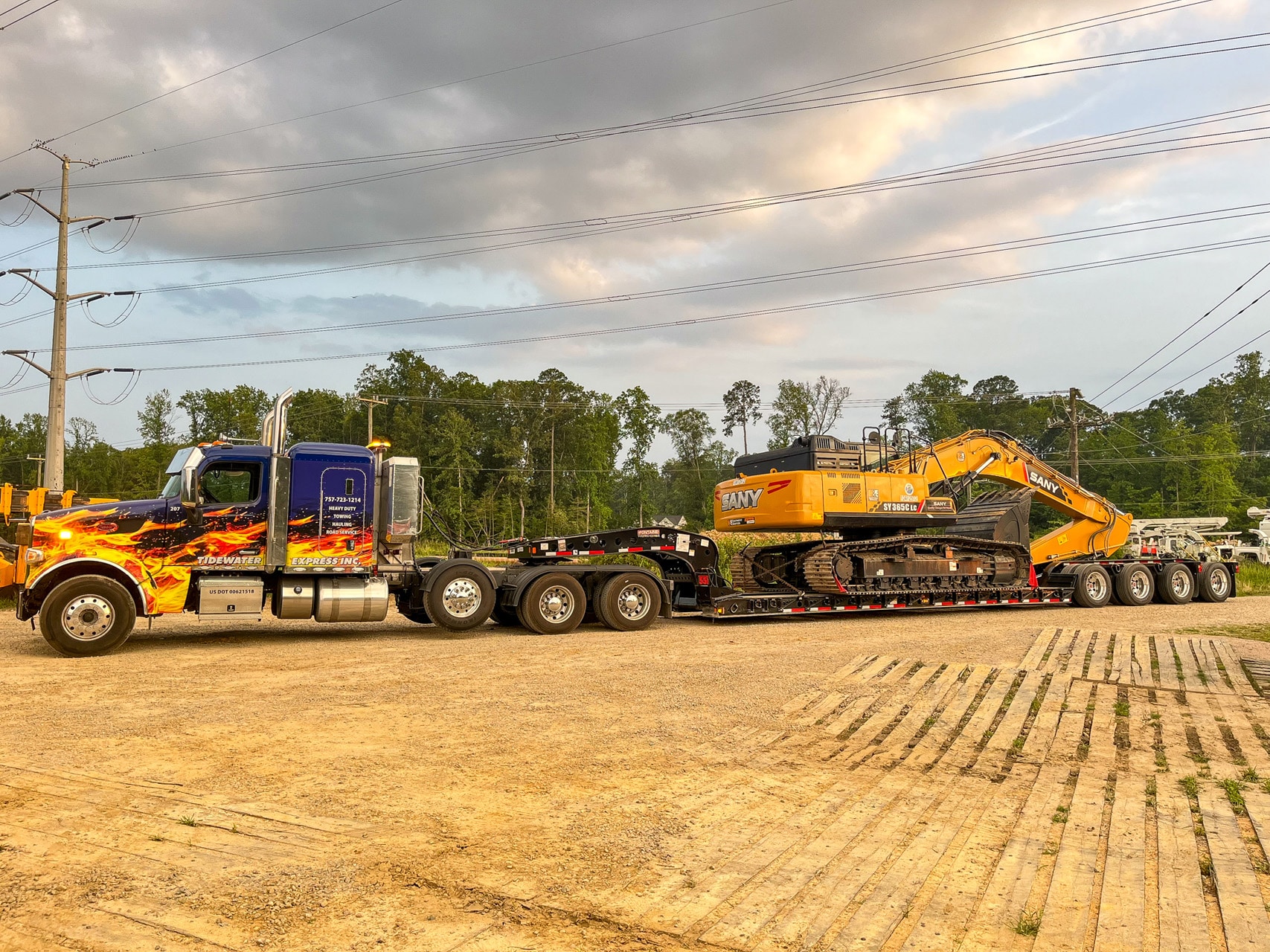
Some vehicles and equipment require more than towing. Large machinery, construction equipment, industrial components, and oversized loads often need specialized transportation services designed specifically for their size and weight.
Tidewater Express provides oversized hauling services capable of relocating equipment of virtually any size throughout the United States. These projects require detailed planning, specialized trailers, proper permits, and experienced operators to ensure the load is transported safely and efficiently.
For many businesses, having access to both towing and hauling services provides a single trusted source for transportation, recovery, and logistics support.
Tidewater Express provides oversized hauling services capable of relocating equipment of virtually any size throughout the United States. These projects require detailed planning, specialized trailers, proper permits, and experienced operators to ensure the load is transported safely and efficiently.
For many businesses, having access to both towing and hauling services provides a single trusted source for transportation, recovery, and logistics support.
Why Is Experience Important?
Heavy-duty towing and recovery situations often occur under difficult conditions. Busy highways, accident scenes, severe weather, and complex vehicle configurations can all create additional challenges.
Experienced operators understand how to assess these situations, select the appropriate equipment, and develop recovery plans that prioritize safety while minimizing downtime. This expertise becomes especially important when dealing with commercial vehicles where every hour of downtime can impact schedules, deliveries, and business operations.
Choosing an experienced towing provider helps ensure vehicles are recovered safely, efficiently, and with as little disruption as possible.
Experienced operators understand how to assess these situations, select the appropriate equipment, and develop recovery plans that prioritize safety while minimizing downtime. This expertise becomes especially important when dealing with commercial vehicles where every hour of downtime can impact schedules, deliveries, and business operations.
Choosing an experienced towing provider helps ensure vehicles are recovered safely, efficiently, and with as little disruption as possible.
Why Choose Tidewater Express?
When an emergency occurs, having the right equipment and experience can make all the difference. Tidewater Express has proudly served the Hampton Roads region since 1988 while also providing nationwide towing, recovery, hauling, and roadside assistance services.
From passenger vehicles and RVs to fully loaded tractor-trailers and oversized equipment, our team has the equipment, training, and resources necessary to handle jobs of virtually any size. With a regularly updated fleet that includes light-duty tow trucks, heavy wreckers, and powerful 50-ton rotators, we are prepared to respond whenever and wherever assistance is needed.
FAQs
What is considered light-duty towing?
Light-duty towing typically involves passenger vehicles, SUVs, motorcycles, vans, and small pickup trucks. These services are commonly used for breakdowns, accidents, roadside assistance, and vehicle transportation.
What vehicles require heavy-duty towing?
Heavy-duty towing is used for larger vehicles such as semi-trucks, tractor-trailers, buses, RVs, commercial trucks, and construction equipment. These vehicles require specialized towing and recovery equipment because of their size, weight, and complexity.
What is a rotator tow truck?
A rotator is a specialized heavy-duty recovery vehicle equipped with a rotating boom capable of lifting and recovering extremely heavy vehicles. Rotators are commonly used during rollovers, accident recoveries, off-road incidents, and other complex recovery situations.
What is the difference between towing and recovery?
Towing involves transporting a vehicle from one location to another. Recovery involves removing a vehicle from a difficult or hazardous situation before transportation can occur. Recovery jobs often require additional planning, specialized equipment, and advanced recovery techniques.
Can heavy-duty tow trucks recover overturned tractor-trailers?
Yes. Professional heavy-duty recovery companies use specialized equipment such as rotator trucks to safely recover overturned tractor-trailers, buses, construction equipment, and other large commercial vehicles.
Does Tidewater Express provide nationwide hauling services?
Yes. In addition to towing and recovery services, Tidewater Express offers oversized hauling services capable of transporting equipment and oversized loads throughout the United States. Our team can coordinate transportation solutions for projects both locally and nationwide.

